Quarta-feira, 19 de Junho de 2013

SALOME, Wiener Staatsoper, Fevereiro de 2013 / February 2013

(review in english below)

 Salome é uma ópera de Richard Strauss com libretto baseado na obra de Oscar Wilde.


A encenação de Boleslaw Barlog é clássica, simples e eficaz. No palco há uma grande escadaria à esquerda, de acesso aos aposentos de Herodes, e um pátio murado ocupando o resto do palco, onde há, ao centro, a cisterna onde Jochanaan está preso. Toda a acção se passa neste cenário.

A direcção musical foi do maestro austríaco Peter Schneider e a Orquestra da Staatsoper de Viena teve um desempenho ao nível do que esta magistral partitura exige.


Os cantores tiveram prestações muito diferentes.

O Herodes do tenor alemão Gerhard Siegel foi fantástico. A voz é muito expressiva e melodiosa e ouve-se sempre sobre a orquestra. Também teve um desempenho cénico irrepreensível. O melhor da noite.


Igualmente com uma interpretação superior foi a outra cantora alemã, o mezzo Michaela Schuster como Herodias. O papel é pequeno mas foi suficiente para mostrar, mais uma vez, a excelente prestação vocal que sempre nos oferece.


O barítono britânico James Rutherford fez um Jochanaan aceitável. A voz tem um timbre agradável, sobretudo no registo mais grave. Canta muito fora do palco o que nem sempre beneficia a audição.


Camilla Nylund, soprano finlandês, foi decepcionante como Salome. A voz não é particularmente atraente mas o pior foi que, sempre que a orquestra soava mais alto (algo muito frequente nesta obra), não se ouvia. Também não foi muito expressiva em palco, não tendo transmitido nem a sensualidade nem o desejo sexual obsessivo que a personagem exige. Uma pena.


Praticamente inaudível foi o tenor mexicano Carlos Osuna como Narraboth. O papel é pequeno mas merecia melhor.

Nos papéis mais secundários houve interpretações interessantes, sobretudo de Herwig Pecoraro, Jinxu Xiahou, Benedikt Kobel e Wolfram Igor Derntl, como os 4 judeus.

Uma Salomé muito aquém das minhas expectativas e sem qualquer comparação com a magistral récita que vi em 2010 na Royal Opera House de Londres. Só Gerhard Siegel (o único comum às duas récitas) esteve ao nível. Curiosamente e apesar de ter sido escrito há quase três anos, este é, de todos os textos disponíveis no blogue, aquele que há mais tempo se mantém entre os 3 mais lidos de sempre.


**

SALOME, Wiener Staatsoper, February 2013 / February 2013

Salome is an opera by Richard Strauss with libretto based on Oscar Wilde’s work.


The staging of Boleslaw Barlog is classic, simple and effective. On stage there is a grand staircase to the left, that gives access to the rooms of Herod, and a walled courtyard occupying the rest of the stage, where there is, at the center, the place where Jochanaan is trapped. All the action takes place in this scenario.

Musical direction was by Austrian conductor Peter Schneide, and the Orchestra and the Vienna Staatsoper was excellent, at the level required by the masterpiece score.

The singers were very different in quality.

German tenor Gerhard Siegel was a fantastic Herod. The voice is very melodious and expressive and is always heard about the orchestra. He had also a faultless performance.
The best of the night.

Also with a top quality performance was the other German singer, mezzo-soprano Michaela Schuster as Herodias. The role is small but it was enough to appreciate, once again, the excellent vocal quality that she always offers us.

British baritone James Rutherford was a very acceptable Jochanaan. The voice has a beautiful tone, especially in the lower register. He sings offstage frequently which is not always beneficial for the sound.

Finnish soprano Camilla Nylund was  disappointing Salome. Her voice is not particularly attractive but the worst was that when the orchestra sounded louder (something very common in this masterpiece) she could not be heard. She was also not very expressive on stage. She was not sensual nor showed an obsessive sexual desire that the character requires. A pity.

Virtually inaudible was the Mexican tenor Carlos Osuna as Narraboth. The role is small but it deserved better.

In secondary roles we heard more interesting interpretations, especially Herwig Pecoraro, Jinxu Xiahou, Benedikt Kobel and Wolfram Igor Derntl as the 4 Jews.

A disappointing Salome, without any comparison with the fabulous performance I saw in 2010 at the Royal Opera House in London. Only Gerhard Siegel (the only soloist that sang on both occasions) was at the level. Interestingly and despite having been written almost three years ago, that is, of all texts on this blog, one thp 3 most read ever.


**

Sábado, 15 de Junho de 2013

NABUCCO, New National Theater, Tóquio, Junho de 2013 / Tokyo, June 2013


Nabucco é uma das primeiras óperas de Verdi, com libretto de Temistocle Solera, que conta a história do rei Nabucodonosor da Babilónia. Foi o primeiro grande êxito do compositor, estreado durante a ocupação austríaca do norte da Itália. O famoso coro dos escravos hebreus Va, pensiero, sull'ali dorate tornou-se um hino do nacionalismo italiano.

Desta vez vou falar menos da ópera e mais da vivência que tive em Tóquio.


 O New National Theatre faz parte do Opera Palace da cidade, uma construção muito recente, moderna e de uma beleza de cortar a respiração. A arquitectura é belíssima, o espaço de uma harmonia formidável, com lagos entrecortados por estruturas de pedra criando um ambiente repousante e de um impacto visual marcante.


 O teatro é uma das muitas salas existentes no complexo, tem uma entrada ampla e magnífica e é de grandes dimensões. Tudo está imaculadamente limpo e arranjado, a decoração é sóbria, a funcionalidade inexcedível e o conforto assinalável. 


 Imediatamente antes do início do espectáculo há os habituais avisos sobre a proibição de tirar fotografias ou fazer gravações durante o espectáculo. Mas nestes há sempre aspectos interessantes (sobre os quais, um dia mais tarde, escreverei algo). Desta vez, em japonês e em inglês, também se pede às pessoas para não se inclinarem para a frente porque perturbam a visibilidade de quem está sentado atrás e informa-se que, em caso de sismo, deveremos permanecer sentados até nos indicarem uma saída em segurança, dado que o edifício foi construído com a mais avançada tecnologia anti-sísmica.


 Sendo o povo japonês talvez aquele que, no mundo, mais gosta de tirar fotografias, ninguém o fez dentro do teatro e sempre que tentei registar fotograficamente, para memória futura, alguns dos momentos inesquecíveis para mim desta experiência única, fui imediatamente convidado, com toda a correcção, a não fotografar. Por isto a escassez de imagens.


 E passo já a comentar a postura dos japoneses. São o povo mais cortês e educado que conheci até hoje! No dia a dia não há ninguém que não tente ajudar empenhadamente, apesar da barreira da língua. Só vindo ao Japão se consegue apreciar a dignidade e respeito com que tratam os estrangeiros (e entre si). Há uma influência significativa do ocidente, sobretudo na imagem corporal e vestuário, mas a essência da cultura oriental nipónica é constante e impressionante. A sensação de segurança é absoluta e, no mar de gente que circula por Tóquio, a ordem e respeito pelos outros não são frequentes, são a única forma de estar!

Em relação ao espectáculo em si, diria que o “eurotrash” chegou em força a Tóquio. A encenação do inglês Graham Vick é horrorosa. Do pior que já vi. O cenário é rico, toda a acção se passa dentro de um moderníssimo centro comercial actual com vários andares e escadas rolantes entre eles. Os hebreus são os sofisticados visitantes e compradores, e os assírios um grupo de assaltantes mal vestidos com cabeças de porco, máscaras dos “anonymous” ou outras, que tudo saqueiam e destroem. E é assim até ao fim do espectáculo. Um nojo!


 Pelo contrário, a música foi de elevada qualidade. A direcção musical esteve a cargo do maestro Paolo Carignari. A Tokyo Philarmonic Orchestra foi grande e competente e o New National Theatre Chorus foi absolutamente excepcional.


 Também os solistas tiveram interpretações notáveis. O barítono Lucio Gallo fez um Nabucco vocalmente muito aceitável, bem audível e expressivo, o mezzo Mariane Coretti foi a melhor da noite na Abigaille pérfida que nos ofereceu. A cantora tem uma voz enorme e soube utilizá-la de forma superior, cativando sempre em todas as intervenções. Também o baixo Konstantin Gorny foi um Zacharia competente, com um timbre muito interessante e um registo grave assinalável. Os cantores japoneses foram excelentes, nomeadamente o tenor Higuchi Tatsuya como Ismael e o mezzo Taniguchi Mutsumi como Fenena. Nos papéis secundários foram também muito bem o soprano Ando Fumiko como Anna, o tenor Uchiyama Shingo como Abdallo e o baixo Tsumaya Hidekazu como Grande Sacerdote.


 O público manteve-se totalmente silencioso durante o espectáculo. Não se ouviu uma tosse ou qualquer outro ruído, apenas os aplausos, calorosos, mas sempre só depois de a música terminar.


 Apesar da encenação abjecta, foi uma noite que não esquecerei.

****


Nabucco, New National Theater, Tokyo, June 2013

Nabucco is one of the first operas by Verdi, with libretto by Temistocle Solera, which tells the story of King Nabucco of Babylon. It was the first great success of the composer because it was released during the Austrian occupation of northern Italy. The famous chorus of the Hebrew slaves Va, pensiero, sull'ali dorate became an anthem of Italian nationalism.

This time I will talk less on the opera and more of the experience I had in Tokyo.

The New National Theatre is part of the city Opera Palace, a very recent, modern construction of breathtaking beauty. The architecture is beautiful, the place is of a formidable harmony with lakes interspersed with stone structures creating a relaxing environment and a striking visual impact.

The theater is one of the many existing rooms in the complex, and has a wide magnificent and large entrance. Everything is immaculately clean and organized, the decor is sober, of unsurpassed functionality and remarkable comfort.

Immediately before the start of the performance we heard the usual warnings about the prohibition to take photographs or make recordings during the performance. But there are always interesting aspects on these warnings (on which, later on, I will write something). This time, in Japanese and in English, they also urged people not to lean forward because they disrupt the visibility of who is sitting back and inform that, in case of earthquake, we should remain seated until we were indicated a way out in safety, since the building was built with the most advanced technology against earthquakes.

The Japanese people are, perhaps, those in the world who like more to take photographs, but nobody did it within the theatre. When I tried to take some for future memory of the unforgettable moments for me during this unique experience, and for this blog, I was immediately invited not to do it, in the most polite way. Hence the lack of pictures in this post.

And I now comment on the the Japanese public. This people is the most courteous and polite I met until today! On day by day there is none that does not try to help assiduously, despite the language barrier. Just when we are in Japan we can appreciate the dignity and respect with which they treat foreigners (and each other). There is a significant influence of the West, especially in body image and clothing, but the essence of oriental japsnese culture is constant and impressive.
The feeling of safety is absolute, and the constant characteristics of the thousands of ​​people flowing through Tokyo are sympathy, order, discipline and respect for others!

Regarding the performance, I would saythe that  "Eurotrash" arrived in full to Tokyo.
The staging by English director Graham Vick is horrible. The worst I've seen. The scenery is rich, the action happens inside a modern shopping mall with several floors with escalators between them. The Hebrews are sophisticated buyers and visitors, and the Assyrians a group of robbers dressed in evil pig heads, masks of "anonymous" or similar. They plunder and destroy everything. And i tis so until the end of the performance. Disgusting!

In contrast, the music was of high quality. Musical director was conductor Paolo Carignari. The Tokyo Philharmonic Orchestra was great and competent and the N
ew National Theatre Chorus was absolutely exceptional.

Also the soloists gave outstanding interpretations. The baritone Lucio Gallo was a vocally very acceptable, very audible and expressive Nabucco. Mezzo Mariane Coretti was the best of the night as the perfidious Abigaille. The singer has a big voice and knew how to use it, always captivating in all interventions. Also the bass Konstantin Gorny was a competent Zacharia, with a very interesting timbre and remarkable bass register. The Japanese singers were excellent, especially  tenor Tatsuya Higuchi as Ishmael and mezzo Taniguchi Mutsumi as Fenena. In supporting roles also were well, soprano Ando Fumiko as Anna, tenor ​​Shingo Uchiyama as Abdallo, and bass Tsumaya Hidekazu as High Priest.

The public remained completely silent during the performance. A cough or any other noise was not heard, just the warm applause, but always only after the music ended.

Despite the abject staging, it was a night I will not forget.

****


Domingo, 9 de Junho de 2013

TOSCA, Zürich Opernhaus, Janeiro de 2013

 (review in english below)

Tosca é uma das minhas óperas favoritas de G Puccini, anteriormente comentada neste blogue por mim e por outros aqui, aqui, aqui e aqui.

Já tive oportunidade de ver esta encenação de Robert Carsen algumas vezes, entre elas em Lisboa, com Elisabete Matos como Tosca. Existe também em DVD e caracteriza-se pelas muitas cadeiras em palco (uma assinatura do Carsen) e cenários algo despidos. Mas é aceitável.


A direcção musical esteve a cargo do maestro Marco Armiliato. Esteve muito bem e orquestra e coros foram irrepreensíveis. Infelizmente, o mesmo não poderei dizer dos cantores.


O soprano norte americano Catherine Naglestad interpretou a protagonista. Foi talvez a pior Tosca que me recordo de ter ouvido. A interpretação foi desajustada da personagem, gritada com grande intensidade. A voz não tem um timbre bonito e a cantora nunca revelou momentos de suavidade na interpretação, tudo foi em stacatto e, no mínimo, em forte. O vissi d’arte foi amorfo, nada emotivo. Cenicamente também não foi convincente. A morte do Scarpia e, sobretudo, a do Cavaradossi foram dois exemplos de ausência de emotividade em palco.

O Cavaradossi do tenor italiano Massimo Giordano também foi pouco interessante. Apesar de o cantor ter uma boa figura, não tirou partido dela em palco. E a voz também não ajudou. Foi muito irregular, o registo médio mal se ouviu e nos agudos, embora sem desafinar, foi incomodativo e nada melodioso. 

Marco Vratogna, barítono italiano em substituição de Thomas Hampson, foi o melhor da récita. Voz potente, bem colocada e afinada. E o cantor soube imprimir-lhe sentimento compatível com os momentos que interpretava. O que parecia ter sido uma decepção (a substituição de ultima hora de Hampson), acabou por se revelar o melhor da recita.

O baixo Valery Murga foi um César Angeloti apagado e, aparentemente, nervoso e inseguro. Nenhum dos restantes intérpretes impressionou.


Uma Tosca decepcionante.

**

  
TOSCA, Opernhaus Zürich, January 2013

Tosca is one of my favorite operas by G. Puccini, previously commented on this blog by me and others here, here, here and here.

I had the opportunity to see this staging by Robert Carsen previously, including in Lisbon, with Elisabete Matos as Tosca. There is also DVD record. It is dominated by many chairs on stage (a signature of Carsen) and rather empty scenarios. But it works.

The musical direction was in charge of conductor Marco Armiliato. He was very good and both Orchestra and Choirs were excellent. Unfortunately, I can not say the same about the soloists.

North American soprano Catherine Naglestad was the protagonist. She was perhaps the worst Tosca that I remember to have heard. The interpretation of the character was inadequate, she screamed with great intensity. The voice has not a nice timbre and the singer never showed moments of softness in the interpretation, everything was in staccato and at least in forte. Vissi d'arte was amorphous, not emotional. Artistically she was also not convincing. The deaths of Scarpia and, particularly of Cavaradossi are two examples of absence of emotion on stage.

The Cavaradossi the Italian tenor Massimo Giordano was also disapointing. Although the singer has a good figure, he did not take advantage of it on stage. And the voice did not help. He was very irregular and barely heard in the medium register and in the top register, although in tune, he was not melodious.


Marco Vratogna, Italian baritone that replaced Thomas Hampson, was the best of the singers. H has a.powerful nice and tund voice. And the singer could show vocal motions accordingly. What seemed to be a disappointment (a last minute replacement for Hampson), turned out to be the best of the performance.

Bass Valery Murga was an apparently nervous and insecure Caesar Angeloti. None of the other performers impressed.

A
disappointing Tosca.

**

Terça-feira, 4 de Junho de 2013

OTELLO de Giuseppe Verdi — FCG, 02.06.2013


(Review in English below)


A FCG apresentou a ópera Otello de Giuseppe Verdi em versão de concerto. A ópera Otello é baseada no drama A tragédia de Otello, o Mouro de Veneza de William Shakespeare sublimemente adaptada pelo escritor e libretista italiano Arigo Boito. Foi a penúltima ópera de Verdi e a primeira após um intervalo de 17 anos sem compor novas óperas após a conclusão da sua muito emblemática Aida. E é absolutamente estratosférica desde todos os pontos de vista.


Otello é um drama em 4 actos cuja história (ver link) se passa em torno de Otello (comandante mouro e governador de Chipre), Desdemona (esposa de Otello) e Iago (capitão das tropas de Otello). Otello é um homem poderoso que se vê atormentado pela perfídia satânica de Iago que lhe induz dúvidas acerca da fidelidade de Desdemona. Otello, perdido de ciúme, mata Desdemona e, ao descobrir a verdade, suicida-se cheio da culpa que o inundava e o sufocava de morte.

A Orquestra Gulbenkian foi dirigida por Lawrence Foster. A sua direcção foi de qualidade em qualquer dos 4 actos. Conseguiu transmitir os diversos efeitos melódicos da obra com mestria.
De notar que foi a última apresentação de Foster como director musical da FCG após uma longa colaboração de 11 anos. Obrigado Maestro!

video

O Coro da Orquestra Gulbenkian apresentou-se em bom nível como é seu habitual: foi magnífico o seu 3.º acto. O Viva il Leon di San Marco foi arrepiante. 


Também a participação do Coro de Câmara Infantil da Academia de Música de Santa Cecília foi de muita qualidade.


O tenor georgino Badri Maisuradze foi Otello. A sua voz não tem uma beleza particular: o timbre é escuro e tem pouca vivacidade. A sua capacidade de projecção foi, por vezes, ligeiramente defeituosa com a voz pouco funda e agudos pouco vivos. Não é, certamente, o tenor heróico que Otello merece: O Esultate não foi perfeito porque lhe falta um agudo com vida. A sua postura, muitas vezes de braços cruzados, não o favoreceu. Quanto à sua interpretação foi muito inconstante: houve momentos em que foi pouco convincente e nunca foi suficientemente desesperado. Ainda assim, o nível global teve qualidade e foi um Otello digno.


O soprano russo Dina Kuznetsova foi Desdemona. A sua voz tem um timbre bonito e muito metálico. Conseguiu não falhar qualquer pianíssimo, foi melódica e expressiva, e teve sempre com uma óptima projecção vocal. A sua prestação foi em crescendo até ao seu último acto em que se apresentou em excelente nível no Salce, Salce, Salce!, bem como no Ave Maria. Foi, pois, uma óptima Desdemona.


O barítono norte-americano Lester Lynch foi Iago. Esteve em grande nível. A sua voz é potente, tem um timbre bonito e uma óptima projecção. O seu Credo foi excelente com uma forte e satânica gargalhada final. Em termos interpretativos foi um Iago mau e insidioso. Para mim, foi o melhor da récita.


O tenor sérvio Ivan Momirov foi Cássio. Já o conhecia do Trovatore do TNSC. Esteve melhor, mas mantenho a minha opinião: tem uma potência vocal inegável com boa projecção, mas o timbre e o ataque aos agudos não é especialmente agradável por ser demasiado lamurioso. A sua postura é talvez demasiado confiante a roçar o arrogante. Apesar disso tudo, cumpriu bem o papel.

O meio-soprano norte-irlandesa Zandra McMaster foi Emília e cumpriu bem.
O tenor austríaco Dietmar Kerschbaum foi Roderigo e esteve em bom plano.
O baixo português Nuno Dias foi Ludovico e foi sempre bem audível, apresentando-se em bom nível.


O barítono português Luís Rodrigues foi um excelente Montano: a sua voz tem um timbre belíssimo e uma projecção óptima. Apesar de colocado atrás da orquestra a sua voz sobrevoou-a na perfeição. Está claramente a pedir papéis mais extensos: merece!


Assistiu-se a uma récita de qualidade elevada quer no que respeita aos cantores, quer à orquestra. Foi, pois, uma óptima maneira de concluir a temporada da FCG e uma despedida em alta do maestro norte-americano Lawrence Foster. A batuta passa agora para o britânico Paul McCressh. Aguardamos ansiosamente a próxima temporada.

-------
(Review in English below)

The FCG presented the opera Otello by Giuseppe Verdi in a concert version. The opera Otello is based on the drama The Tragedy of Othello, the Moor of Venice by William Shakespeare sublimely adapted by writer and Italian librettist Arigo Boito. It was the penultimate Verdi’s opera and the first after an interval of 17 years without writing new operas after the completion of its very iconic Aida. Otello is a drama in four acts whose story (see link) goes around Otello (Moorish commander and governor of Cyprus), Desdemona (Otello's wife) and Iago (Otello captain of troops). Otello is a powerful man who finds himself tormented by treachery satanic Iago that will induce doubt about Desdemona's fidelity. Lost of jealousy, Otello kills Desdemona, and discovering the truth, suicide himself seeking the salvation of his soul.

Lawrence Foster conducted the Gulbenkian Orchestra. His direction was of quality in any of the four acts. He managed to convey the various melodic effects of the work with mastery.
Note that it was the last performance of Foster as music director of FCG after a 11 yearlong collaboration. Thank you Maestro!

The Gulbenkian Choir performed in good level, as usual: it was magnificent in the third act. Viva il Leon di San Marco was creepy. The participation of the Music Academy of Santa Cecilia Chamber Children’s Choir was of high quality.

The Georgian tenor Badri Maisuradze was Otello. His voice has no particular beauty: the timbre is dark and has little liveliness. His projection capacity was sometimes slightly defective with a shallow voice and high note not sufficiently alive. He is not certainly the heroic tenor Otello deserves: The Esultate was not perfect because he lacks vivid sharps. His posture, often idly, not favored him. As for his interpretation was very inconsistent: there were times when it was unconvincing and was never desperate enough. Still, the overall quality was decent and he was a worthy Otello.

The Russian soprano Dina Kuznetsova was Desdemona. Her voice has a beautiful tone and very metallic. She did not fail any pianissimo, was melodic and expressive, and always had a great vocal projection. Her exibition was growing until its final act that she performed at an excellent level in Salce, Salce, Salce!, and the Ave Maria. She was therefore a great Desdemona.

The American baritone Lester Lynch was Iago. He was a great. His voice is powerful, has a beautiful tone and great projection. His Credo was excellent with a strong and satanic laughter end. In terms of his interpretation Iago was a wicked and insidious. For me he was the best of the recitation.

The Serbian tenor Ivan Momirov was Cassio. Already knew from the TNSC’s Trovatore. Despite been better, I stand by my opinion: he has an undeniable vocal power with good projection, but the timbre and the acute notes attack is not especially nice because it is too whimpering. His posture is perhaps too confident and slightly arrogant. Despite all this, he fulfilled the role.

The Northern Irish mezzo-soprano Zandra McMaster was Emilia and served well.
The Austrian tenor Dietmar Kerschbaum was Roderigo and was in good plan.
The Portuguese bass Nuno Dias was Ludovico and was always very audible, performing at a good level.
Portuguese baritone Luís Rodrigues was an excellent Montano: his voice has a beautiful tone and excellent projection. Although placed behind the orchestra his voice flew perfectly over it. He is clearly asking for more extensive roles: he surely deserves!

There has been a high quality performance both regarding singers and orchestra. It was therefore a great way to finish the FCG’s 2012/13 season and a beautiful way to farewell American conductor Lawrence Foster. The baton now passes to the Briton Paul McCressh. We look forward to next season.

Quinta-feira, 30 de Maio de 2013

DER FLIEGENDE HOLLÄNDER, Zürich Opernhaus, Janeiro de 2013

(review in english below)

O Navio Fantasma (Der Fliegende Holländer) é uma das primeiras óperas de R. Wagner, escrita quando o compositor tinha 28 anos. É uma ópera romântica por excelência que, como outras que lhe seguiram, foi inspirada numa lenda nórdica. Mais curta que o habitual no compositor, é frequentemente apresentada sem intervalo, como foi o caso. A música é belíssima e de grande intensidade dramática.


O Holandês errante está condenado a navegar eternamente pelos mares, vindo a terra uma vez de sete em sete anos, na costa norueguesa, em busca de uma mulher que lhe seja fiel, o que nunca aconteceu. Daland, um capitão norueguês, em troca de ouro, oferece-lhe a mão da filha Senta que é amada por Erik mas que jura fidelidade ao Holandês. O final é trágico com o Holandês (julgando-se traído) a partir e naufragar e Senta a suicidar-se, saltando de um rochedo para o mar.


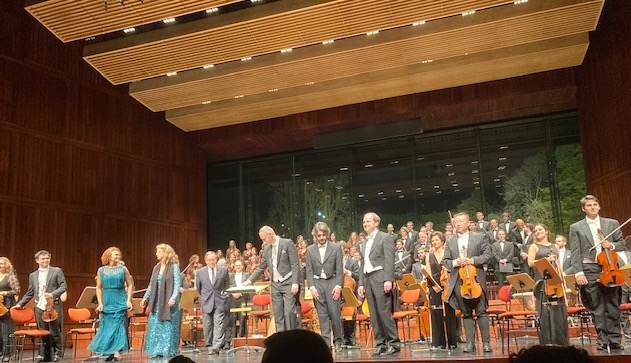
A encenação de Andreas Homoki é interessante. Transporta a acção para um escritório de navegação no início do Século XX. Todos os intervenientes, homens e mulheres, estão vestidos a rigor, de forma semelhante e de escuro. O Holandês surge como uma figura imponente, com um grande casaco negro e chapéu com penas. As fiandeiras trocam as rocas por máquinas de escrever. O palco é giratório. No centro aparece um mapa de África com os portos assinalados por setas. Há também um escravo negro. Em cima, está um relógio com ponteiros que vão avançando nas horas, ou recuando quando a narrativa è sobre o passado. No centro e nas paredes laterais dominam grandes quadros (hologramas) representando o mar que ora está calmo, ou ligeiramente ondulante ou muito agitado, consoante a acção retratada. O efeito cénico é bem conseguido. A única opção desajustada, para mim, foi a morte de Senta que, em vez de se lançar ao mar, mata-se com um tiro de espingarda.


O jovem maestro francês Alain Altinoglu dirigiu de forma superior a orquestra Philharmonia de Zurique. O Coro a Ópera de Zurique foi excepcional. E os solistas foram superlativos:


Bryn Terfel, barítono galês especialista em papéis wagnerianos e muito apreciado pelos autores deste blogue, não desiludiu. Foi um Holandês imponente e, como sempre, associou a sua excepcional qualidade vocal a uma presença marcante em palco. Penso que posso resumir de forma simples e clara se imaginar que Wagner teria gostado de ver esta sua ópera interpretada por um cantor deste calibre. Terfel é mais um caso que tem tudo, boa figura, voz magnífica e uma presença em palco insuperável.


Senta foi interpretada pelo soprano alemão Anja Kampe. É uma das minhas cantoras favoritas na actualidade e foi arrasadora! A voz é magnífica, de uma potência avassaladora e de grande beleza tímbrica. A tessitura é perfeita para o papel. Foi muito expressiva na personagem e acho que é impossível fazer melhor.

O Daland do baixo finlandês Matti Salminen foi também uma agradável surpresa pela consistência e qualidade interpretativas. Salminen, um sexagenário respeitável, é mais uma demonstração de que a idade mais avançada pode não ser sinal de decadência vocal, sobretudo nos baixos.

Marco Jentzsch, tenor alemão, foi um Erik de voz clara e limpa, bem audível e também com boa figura e presença cénica.

A Mary do jovem mezzo romeno Liliana Nikiteanu impressionou pela qualidade e projecção vocais. Apesar de bem caracterizada, este papel é habitualmente interpretado por cantoras mais velhas, o que em nada diminuiu a óptima prestação da intérprete.


Uma récita muito interessante!

****

DER FLIEGENDE HOLLÄNDER, Opernhaus Zürich, January 2013

The Flying Dutchman (Der Fliegende Holländer) is one of the first operas of R. Wagner, written when the composer was 28 years old. It is a typical romantic opera that, like others that followed, was inspired by a Nordic tail. Shorter than usual within the composer operas, it is often presented without intermission, as was the case. The music is beautiful and of great dramatic intensity.

The flying dutchman is eternally condemned to sail the seas, coming to earth once every seven years, to the Norwegian coast, in search of a woman who is faithful to him, which never happened before. Daland, a Norwegian captain, in exchange for gold, offers his daughter's hand, Senta, that is loved by Erik but who swears fidelity to the Dutch. The ending is tragic with the Dutch (suspecting that he was betrayed) leaving again to the sea and sank, and Senta killing herself by jumping from a cliff into the sea.

The staging of Andreas Homoki is very interesting. The action is in a shipping office at the beginning of the twentieth century. All actors, men and women, are dressed properly, identically and in dark outfits. The Dutchman emerges as an imposing figure, with a large black coat and a hat with feathers. The spinners exchange the rattles for typewriters. The stage rotates frequently. In the center is a big map of Africa with the ports indicated by arrows. There is also a black slave on stage. On top there is a clock that goes forward or, when a narrative about the past is mentioned, backword. In the center and side walls dominate large paintings of the sea. It is usually calm ans static, but, the waves either ondulate slightly or heavily, depending on the action portrayed. The scenic effect is magnificent. The only option that I did not like was the death of Senta, that instead of jumping into the sea, she killing herself with a shotgun blast.

 Young French conductor Alain Altinoglu directed Philharmonia Orchestra of Zurich. The Chorus of the Zurich Opera House. They were exceptional. And the soloists were superlatives:

Bryn Terfel, Welsh baritone, expert on Wagnerian roles and greatly appreciated by the authors of this blog, did not disappoint. He was an impressive Dutchman and, as always, associated his exceptional vocal quality to a remarkable presence on stage. I think I can summarize in a simple and clear way if I say that I imagine that Wagner would have liked to see his opera performed by a singer of this caliber.Terfel is another artist that has everything, good figure, magnificent voice and an unsurpassed stage presence.

Senta was interpreted by German soprano Anja Kampe. She is one of my favorite singers at present and she was overwhelming! The voice is magnificent, overwhelming power of a great beauty and timbre. It is perfect for the role. She was very expressive on stage and for me it is impossible to do better.


Finnish bass Matti Salminen’s Daland was also a pleasant surprised by the quality and consistency of the interpretation. Salminen, a respectable over 60 year old man, is a further demonstration that older age may not be a sign of vocal decadence, especially in bass singers.

Marco Jentzsch, German tenor, was a clear, clean voice and very audible Erik, also with good figure and good stage presence.

Young Romanian mezzo Liliana Nikiteanu impressed as Mary by the quality and vocal projection. Although well characterized, this role is usually played by older singers, which in no way diminished the optimal performance of the interpreter.

A very interesting performance!

****

Domingo, 26 de Maio de 2013

FALSTAFF de Giuseppe Verdi — Fundação Gulbenkian, 25.05.2013


(Review in English below)


Assistimos ontem, na Fundação Gulbenkian, à vigésima-oitava e última das óperas compostas pelo compositor italiano, Giuseppe Verdi. Estamos a falar da comédia lírica Falstaff, cujo libreto, escrito por Arrigo Boito (que colaborou com Verdi também em Otello e em Un Ballo in Maschera), se baseou na obra As Alegres Comadres de Windsor, de William Shakespeare.

A ópera, composta entre 1889 e 1893, foi estreada, obtendo enorme e imediato sucesso, a 9 de Fevereiro de 1893 no Teatro Alla Scalla, em Milão e foi, apenas, a segunda ópera de cariz cómico de Verdi, quarenta anos após a primeira e totalmente falhada tentativa com Un giorgno de regno, que foi retirada do Scalla milanês imediatamente após a primeira récita.

A história da ópera é conhecida dos amantes da ópera, pelo que não a descreveremos aqui. Em todo o caso, deixamos o link para o programa de sala disponibilizado pela Gulbenkian, que inclui, para além da sinopse, um excelente texto da autoria de Francisco Sassetti acerca de Falstaff.


O Falstaff de ontem foi apresentado em versão encenada, contando com a participação da encenadora italiana Rosetta Cucchi. Apesar de o Grande Auditório da Fundação Gulbenkian não se encontrar preparado para proceder a grandes encenações, visto tratar-se de uma sala de concertos, foi preparada uma versão que, poderíamos dizê-lo assim, ficou entre a versão encenada e a versão de concerto. Não obstante as limitações referidas, a “semi-encenação” foi muito simples mas eficaz. Foi montado um palco atrás da orquestra e, num plano mais elevado, surgia, do lado direito, uma barrica de vinho, adornada por um amplo conjunto de copos e garrafas de bebidas espirituosas, e uma cadeira alta ao estilo de um bar, que assim criavam o ambiente de taberna onde Sir John Falstaff se encontra boa parte do tempo da ópera a tratar de encher a barrica que carrega dentro do abdómen. Do outro lado, o direito, uma grande mesa redonda e um candeeiro criavam o ambiente de uma sala onde as Alegres Comadres confraternizavam, e aos quais se juntou um cesto-baú de verga no segundo acto, evocando o enorme cesto de roupa suja em que o “enorme” Falstaff é atirado ao rio para fugir do ciumento marido de Alice Ford, o Sir Ford.


No terceiro acto, e porque a ação se desenvolve na penumbra de um bosque à meia-noite, foi aberta a parte de trás do Grande Auditório, que tem vista para os jardins da Gulbenkian, pelo que o cenário da cena final ficou totalmente em consonância com as exigências do libretto. Enfim, e sem querer insistir em Francesco Esposito, que encenou as três óperas de Verdi que o Teatro São Carlos produziu em Abril e Maio e que foram amplamente descritas e comentadas neste blog, não podemos deixar de salientar que Rosetta Cucchi fez, com ainda menos, muito mais!


O maestro foi Lawrence Foster, tendo dirigido a Orquestra Gulbenkian, esteve, em geral, em bom plano, sem ter sido extraordinário, já que não foi clara a sua abordagem interpretativa da ópera. Nem foi propriamente cómica, com o foi claramente, por exemplo, Solti na gravação que fez para a Decca, nem optou por um estilo claramente mais intimista como Abbado na recente gravação para a Deutsche Grammophon. Por exemplo, no início da ópera faltou quase totalmente a estridência nos sopros, perdendo-se o início tosco e cómico de que os sopros devem dar imediatamente nota. Mas, gostos à parte, insistimos que a orquestra esteve, em geral, bem, tendo sido uma récita agradável. A curta participação do Coro Gulbenkian foi de qualidade.


Sir John Falstaff foi o barítono norte-americano Lester Lynch. Foi cénica e interpretativamente muito convincente, tendo cumprido perfeitamente as exigências cómicas da sua personagem, desde logo, mas não só, porque a sua figura física é perfeitamente compatível com a descrição de Falstaff: é enorme e, se as Alegres Comadres conseguissem aprovar o imposto sobre a gordura de que falam na ópera para castigar Falstaff, não temos dúvidas de que o intérprete não lhe conseguiria fugir. Tem uma voz muito profunda e muito potente, não revelando dificuldades nos agudos mais fortes, mas tem um certo grão na voz que prejudica a clareza na projeção e a dicção.


Sir Ford foi o barítono moldavo Igor Gnidii. Foi, talvez, a melhor voz da récita. Tem uma voz potente e clara e, do ponto de vista da interpretação, esteve muito bem, quer vocal, quer cenicamente. Na sua ária principal (se se puder falar disso nesta ópera) – È sogno, o realtà? – esteve muito bem e a sua interpretação foi muito correta: nem foi muito agressivo, como alguns barítonos tendem a ser, apesar das dúvidas que, não obstante o encontro de Falstaff com Alice até já estar marcado, deviam ter, nem demasiado descrente no seu ciúme, o que teria dado espaço a uma interpretação amorfa.

O tenor português Fernando Guimarães foi Fenton. O papel é relativamente pequeno, mas muito melodioso. Esteve bem, sem ser perfeito, mas cumpriu plenamente o papel. Tem um timbre muito bonito e boa presença em palco. A projeção da sua voz nem sempre é a ideal, apresentando por vezes algumas dificuldades, ainda que, desta vez, menos do que em anteriores situações em que tivemos oportunidade de o ouvir.


Dr. Caius foi o tenor austríaco Dietmar Kerschbaum. O papel desta personagem é bastante curto e tem especial importância logo no início do primeiro acto. Gostámos da sua voz, que é melódica e bastante bem sustentada. Projetou sempre bem a sua voz e esteve cenicamente bem.


O tenor alemão Paul Kaufmann foi Bardolfo, enquanto que o baixo português Nuno Dias foi Pistola. Gostámos igualmente de ambos, tendo os dois funcionado muito bem cenicamente sendo as suas vozes bastante audíveis. Apesar de a sua participação ser bastante limitada, são das poucas personagens da ópera de cariz estritamente cómico, campo em que estiveram muito bem e coordenados.

Alice Ford foi encarnada pelo soprano francês Isabelle Cals. Gostámos muito da sua prestação. Tem um papel central na ópera e conseguiu sê-lo efetivamente, quer ao nível da sua capacidade vocal, quer no campo da interpretação cénica.


O soprano romeno Liliana Faraon foi Nanneta. Tem um timbre bonito e agradável, esteve bem cenicamente. Projetou relativamente bem a voz, mas nem sempre com a sustentação ideal dos agudos, nomeadamente dos mais prolongados.

Renée Morloc, meio-soprano alemão, foi Mrs. Quickly. Apresentou uma voz bastante profunda e interpretou muito bem o seu papel, que tem um carácter essencialmente cómico. Contracenou muito bem com Falstaff quando surge na taberna para lhe dar conta do “interesse” de Alice e de Meg Page no amor que Falstaff lhes oferecera.


Meg Page foi interpretada pelo meio-soprano irlandês Zandra McMaster. O papel é praticamente irrelevante do ponto de vista vocal. Entre o quarteto de vozes feminino não tem qualquer destaque individual, ao contrário das outras três personagens. Ainda assim, esteve bem, conquanto não possamos fazer uma apreciação muito concreta da sua voz.

Em suma, foi uma récita bastante boa, que confirma a boa réplica que a Fundação Gulbenkian tem dado nas poucas óperas que têm feito parte da temporada 2012/2013 (relembremo-nos, por exemplo, da excelente A Flauta Mágica de Mozart, com Renée Jacobs) e que abre boas perspectivas para o que se poderá escutar nas versões de concerto da ópera Otello, que terão lugar na próxima quinta-feira (dia 30 de Maio) e no próximo Domingo (dia 2 de Junho), às quais iremos assistir e de que se dará conta neste blog.

-----------
(Review in English)

Yesterday, we attended at the Gulbenkian Foundation the twenty-eighth and last opera composed by Italian composer Giuseppe Verdi. We are talking about the lyrical comedy Falstaff, whose libretto, written by Arrigo Boito (who also collaborated with Verdi in Otello and Un Ballo in Maschera), was based on the work The Merry Wives of Windsor by William Shakespeare.

The opera, composed between 1889 and 1893, was premiered at February 9, 1893 at the Teatro Alla Salla in Milan getting huge and immediate success,  and was only the second Verdi’s comic opera, forty years after the first and utterly failed attempt to Un Giorgno di regno, which was removed from Scalla immediately after the first recitation.

Opera lovers know the opera history, so we will not describe it here. In any case, we leave the link to the room’s program provided by the Gulbenkian, which includes, beyond the synopsis, an excellent text by Francisco Sassetti about Falstaff.

Falstaff was presented in staged version, with the participation of the Italian stage director Rosetta Cucchi. Although the Grand Auditorium of the Gulbenkian Foundation not find prepared to make major scenarios, as it is a concert hall, the version that was prepared, we could say it, thus became between a staged and concert opera version. Despite these limitations, the "semi-staged" was very simple but effective. A stage was mounted behind the orchestra. On a higher plane, it appeared on the right side, a barrel of wine, adorned by a wide set of glasses and wine bottles, and a high chair in the bar style, so they created tavern environment where Sir John Falstaff is having great time filling the barrel that he carries inside his abdomen. On the other hand, at the right side, a large round table and a lamp created the atmosphere of a room where the Merry Wives fraternized, and joined them a basket-wicker chest in the second act, evoking huge laundry basket in which the "huge" Falstaff is thrown into the river to escape the jealous husband of Alice Ford, Sir Ford. In the third act, and because the action unfolds in the shadows of a forest at midnight, the opened back stage of the Grand Auditorium, which overlooks Gulbenkian’s gardens, was totally perfect and matching libretto’s requirements. Finally, and without wanting to insist in Francesco Esposito, who staged three Verdi’s operas at Teatro São Carlos in April and May that were widely described and commented on this blog, we must point out that Rosetta Cucchi made, with even less money, much better!

The conductor Lawrence Foster was, directing Gulbenkian Orchestra, generally in good plan, without being extraordinary, since it was not clear his interpretive approach of the score. Neither it was strictly comic, as it is clearly, for example, Solti’s recording for Decca, or intimate as the recent Abbado’s recording for Deutsche Grammophon. For example, at the beginning of the opera it nearly completely lacked the stridency in wind instruments, losing the early rough and humorous that they should immediately take note. But taste aside we insist that the orchestra was, in general, well, having been a nice recitation. The Gulbenkian Choir interpreted the short choral role with quality.


Sir John Falstaff was the American baritone Lester Lynch. He was very scenic and interpretively compelling, and perfectly fulfilled the requirements of his comic character from the outset, but not only, because his physical figure is perfectly compatible with the description of Falstaff: he is huge and if the Merry Wives managed to approve a tax punnishing fat as they proposed, we have no doubt that the interpreter will not be able to escape. He has a very deep voice and very powerful, not revealing difficulties in high pitch notes, but has certain grit in his voice that impairs clarity in diction and projection.

Sir Ford was the Moldovan baritone Igor Gnidii. He was perhaps the best voice of recitation. He has a powerful and clear voice, and at the point of view of interpretation, he did it very well, either vocal or scenically. In his principal aria (if one can speak of it in this opera) - È sogno, to realtà? – he was very good and his interpretation was quite correct: neither was very aggressive, as some baritones tend to be, despite doubts that he should have because of Falstaff previous arranged meeting with his wife, or too cynical in his jealousy, which would have given way to an amorphous interpretation.

The Portuguese tenor Fernando Guimarães was Fenton. The role is relatively small, but very melodic. He was good without being perfect, but fully fulfilled the role. He has a beautiful timbre and good stage presence. The projection of his voice is not always ideal, sometimes presenting some difficulties, though, this time, less than in previous situations where we had the opportunity to hear him.

Dr. Caius was the Austrian tenor Dietmar Kerschbaum. The role of this character is quite short and is especially important early in the first act. We liked his voice, which is melodic and very well supported. He always projected his voice well and was scenically at good level.

The German tenor Paul Kaufmann was Bardolph, while the Portuguese bass Nuno Dias was Pistol. We liked both equally, and both worked very well scenically and with their voices quite audible. Although their participation is quite limited, are the few characters of the opera strictly oriented to be comic, they were very good and coordinated.

Alice Ford was incarnate by French soprano Isabelle Cals. We enjoyed her performance very much. She has a central role in the opera and managed it effectively, both in terms of her vocal ability, and in the field of scenic interpretation.

The Romanian soprano Liliana Faraon was Nanneta. She has a beautiful and pleasant tone, and she was very well scenically. She projected her voice relatively well, but not always with the ideal support of high notes, in particular longer ones.

Renée Morloc, German mezzo-soprano, was Mrs. Quickly. She presented a very deep voice and played her role very well which is essentially comic. She was playing opposite very nicely with Falstaff when she arises the tavern to give account of the "interest" of Alice and Meg Page in Falstaff love he offered them by letter.

Meg Page was interpreted by Irish mezzo-soprano Zandra McMaster. The role is practically irrelevant from the vocal standpoint. Among the quartet of female voices she has no prominent role, unlike the other three characters. Still, she was good, although we cannot make a very real appreciation of her voice.

In short, it was a very good recitation, which confirms the good replica Gulbenkian Foundation has been given in the few operas that have been part of the 2012/2013 season (we remember, for example, the excellent The Magic Flute by Mozart, with Renée Jacobs), and augurs for what we can hear in concert versions of opera Otello, which will take place next Thursday (May 30th) and next Sunday (June 2), to which we will attend and will comment in this blog.